After Early Modern
Arcetri, near Florence holds the long persistence.
The place is not backdrop. Arcetri matters because this is where censure becomes daily condition, and where observation has to survive through weakness, restriction, and time.
A house close enough to the city to remember public life, but restrictive enough to make inquiry continue under watch and within limits.
Arcetri explains why the encounter begins in stillness instead of public controversy. The pressure is prolonged: failing sight, surveillance, restricted movement, and the discipline of continuing to think inside them.
It also turns the journey toward the book, because staying with Galileo now means following how truth, authority, confinement, and persistence have been living together longer than one room can hold.
Remain with this life
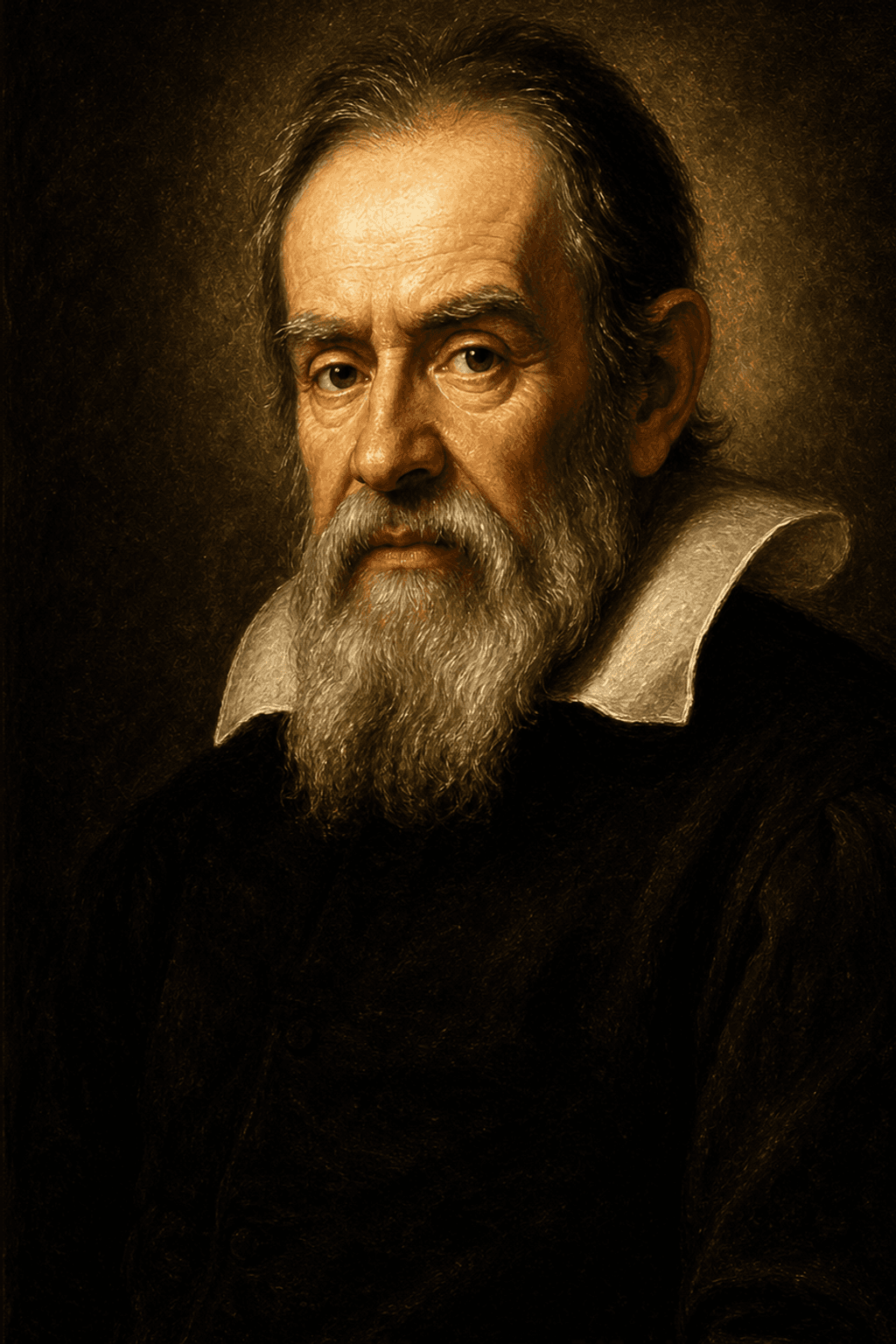
Stay with Galileo in the book.
The journey has brought you to Galileo's room, the later life that carries the same intellectual pressure, the wider age, and the place where censure could not make observation disappear. The book lets that same life continue without interruption.
Galileo Galilei / 1638 - Arcetri
Nearly blind and confined at Arcetri, the father of modern science writes what the Inquisition forbade him from saying aloud.
Continue
Then let the next life begin.
Membership opens the wider Meet the Past library for EUR 49/year when you want the next encounter to begin as this one closes.
Return to Galileo now that the house is clearer.
Go back to the opening room and feel more precisely how much of the pressure comes from Arcetri as well as the person inside it.
Step back to the wider age behind the confinement.
Arcetri matters most when the visitor can still see the early modern world pressing through its quiet.
Known
The governed Galileo volume anchors him at Arcetri in 1638, and the governed place registry includes Arcetri, near Florence as a canonical location.
Reading
This step reads Arcetri as a house of continued inquiry under restriction because the governed time-anchor line and GROW-01 opening encounter both place confinement, near blindness, and unsurrendered truth in the same setting.